Continuous monitoring between every manual check.
Bring connected temperature and environmental readings into the same operational view as your checklists, Reference Materials and reports.
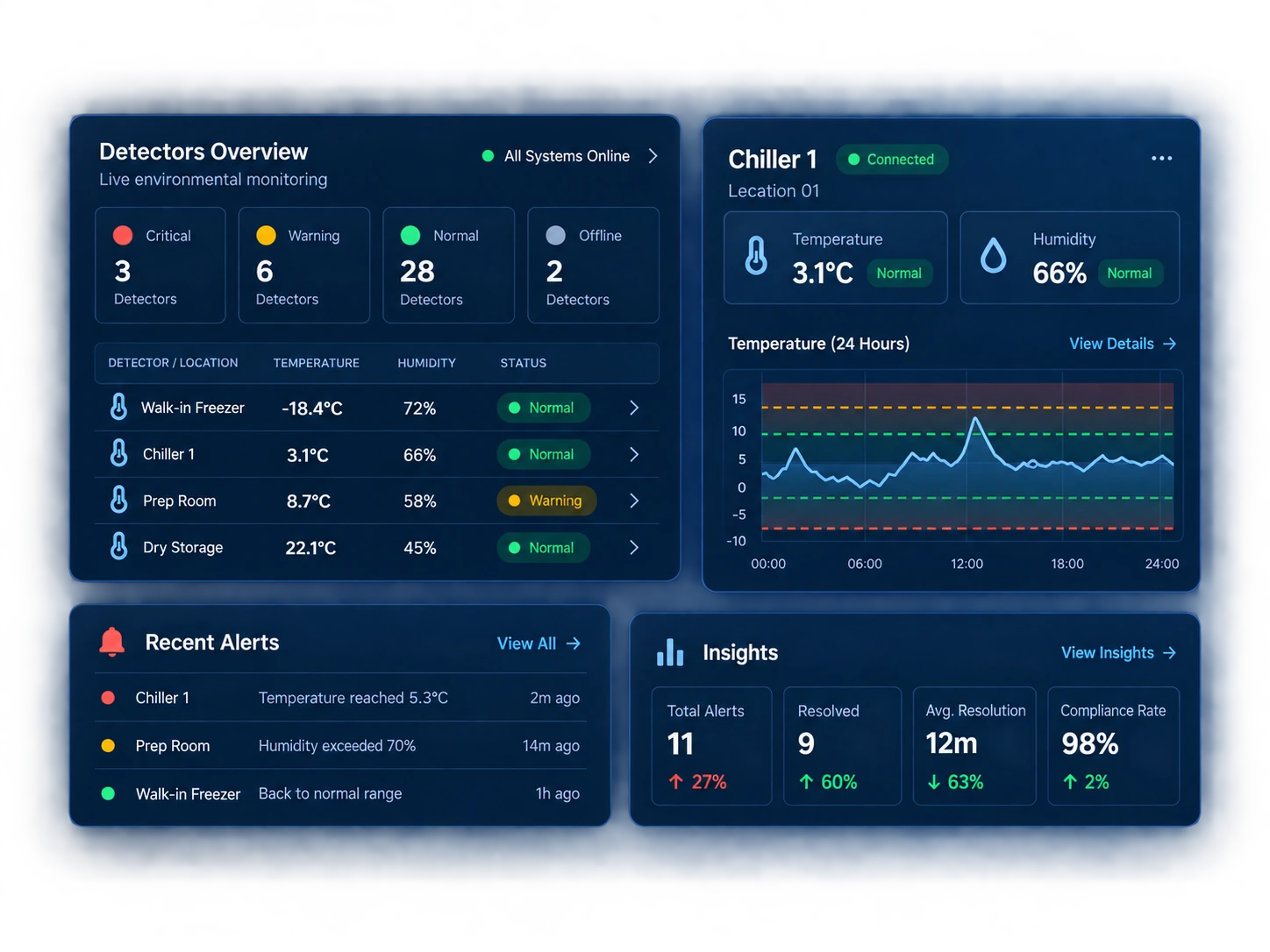
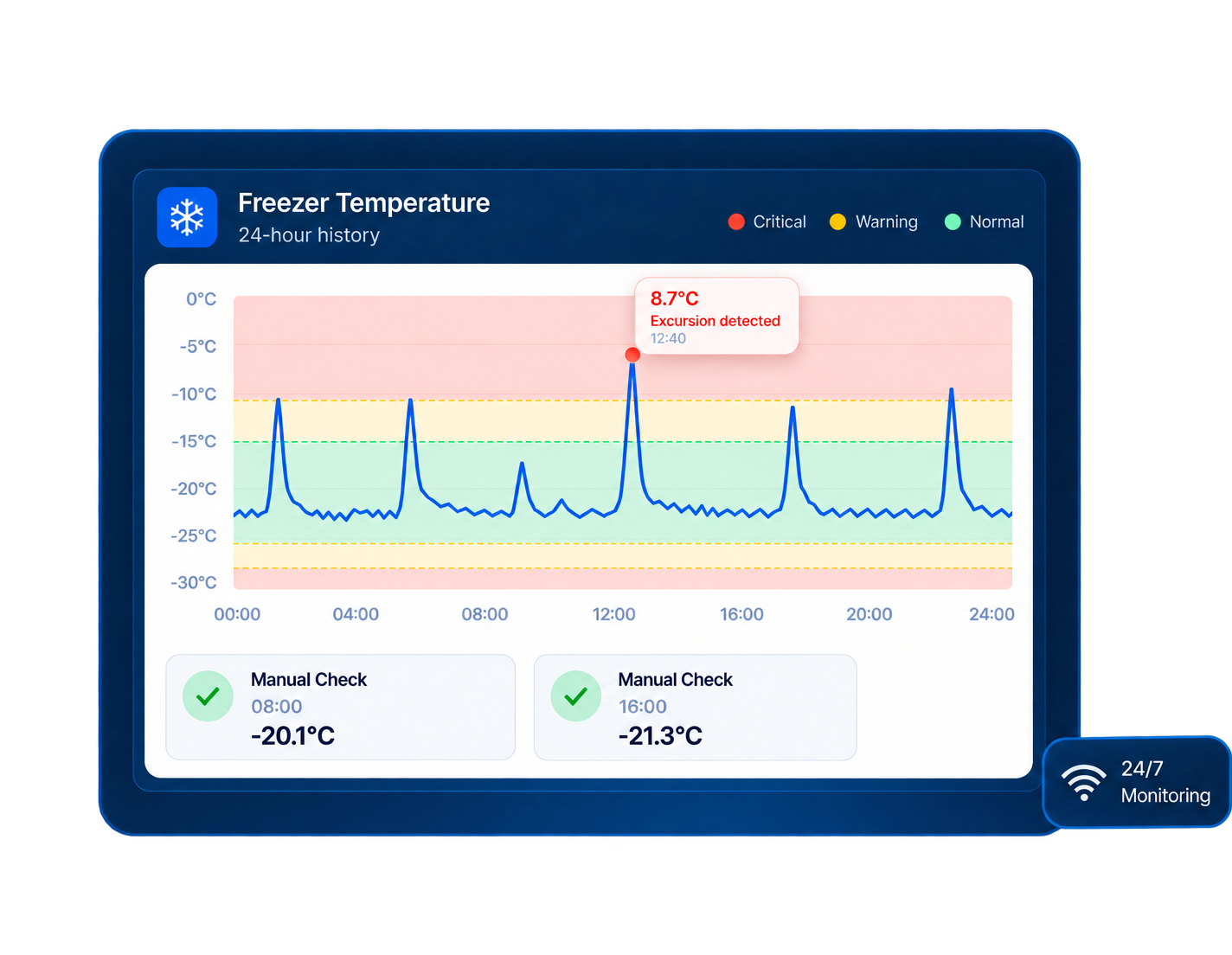
A manual reading shows one moment. Monitoring shows what happened between moments.
Manual checks capture individual moments and remain important for process and context. Smart Detectors add the missing timeline—showing whether temperature or humidity stayed within the expected range between scheduled checks.
More than a temperature number on a dashboard.
Continuous readings
Monitor temperature and humidity where supported without waiting for the next scheduled manual check.
Threshold monitoring
Highlight readings that move outside the configured operating range.
Device status
Keep visibility of detector connectivity and no-reading conditions instead of assuming silence means normal.
Historical trends
Review what happened over time, not only the latest reading.
Multi-location view
Centralize monitored equipment and environments across different sites.
Operational context
Use detector history alongside manual checks, documented follow-up and reporting.
Monitor critical environments across the operation.
Make abnormal conditions visible.
Continuous data belongs inside the wider operational story.
Detector data is most useful when management can review it alongside the human check, the exception, the response and the final evidence.
Detector records the environment continuously.
Threshold or no-reading conditions become visible.
Teams compare the event with manual checks and operating context.
The operation responds according to its approved procedure.
History remains available for later management review.
Detector type, quantity, placement, temperature range, humidity capability and installation approach depend on the monitored environment and project requirements.
See what is actually happening across your operation.
Connect daily execution, food-safety controls, evidence and continuous monitoring in one platform.